
For many older people, staying in a familiar house means more than keeping the same address. It means enjoying daily routines, seeing familiar neighbors, and holding on to a sense of independence. When families ask what is aging in place, they are asking how someone can continue living in their own home safely and comfortably as their needs change.
Aging in place refers to remaining in a familiar living environment while receiving the support needed for everyday life. However, successful aging requires more than a comfortable house. It involves planning for changing health needs, personal safety, social connections, and reliable care.
What Families Should Know About Staying Independent
- Aging in place allows older adults to remain in familiar surroundings while maintaining independence.
- Home modifications can reduce safety hazards and make everyday activities easier.
- In-home care services can help with bathing, meals, mobility, and other daily needs.
- Family involvement and social connections are important for emotional well-being.
- Increasing care needs may require professional supervision beyond occasional assistance.
- An adult family home can offer a residential alternative when living alone becomes difficult.

Why Do Seniors Prefer to Remain at Home?
Many seniors value the independence that comes with making their own decisions. Choosing when to eat, how to spend the day, and when to welcome visitors contributes to a feeling of control.
Remaining in familiar surroundings also offers emotional comfort. Personal belongings, established routines, and neighborhood connections can help someone feel secure.
Other benefits include maintaining privacy, continuing enjoyable activities, and staying connected to the local community.
However, aging in place comes with responsibilities. Home maintenance, medical appointments, transportation, and household tasks may become increasingly difficult. Families must consider whether the benefits of staying home continue to outweigh the challenges.
Independent living fosters independence when the surrounding environment supports a person’s abilities rather than creating additional risks.
How Can You Make a Home Safer for Aging?
A safe living environment should accommodate changing strength, balance, vision, and mobility. Small adjustments can often make everyday activities more manageable.
Begin with a room-by-room risk assessment, focusing on bathrooms, bedrooms, stairways, and frequently used walkways.
Start With Practical Home Modifications
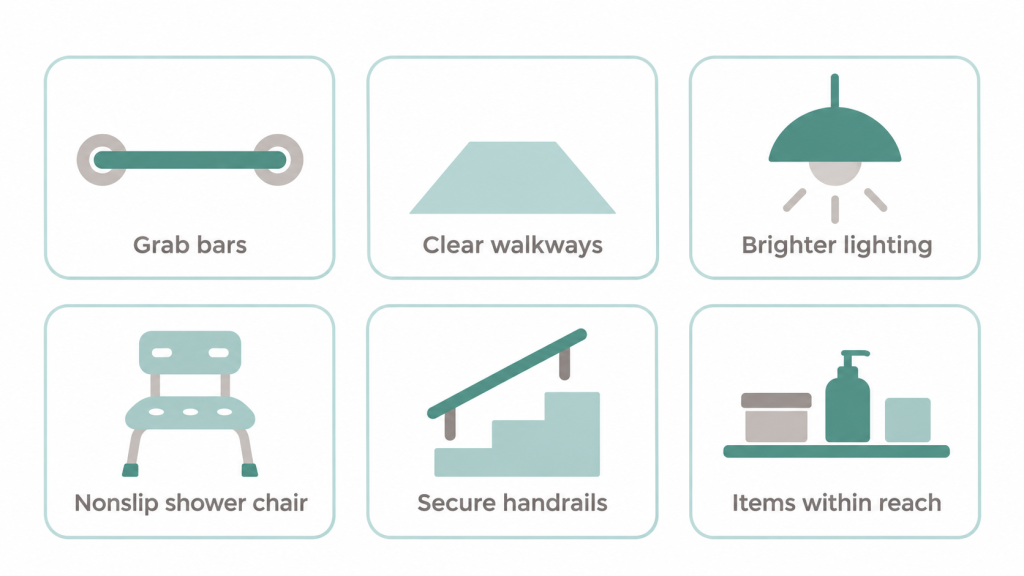
Consider these improvements:
- Install securely mounted grab bars near toilets and showers.
- Remove loose rugs, electrical cords, and clutter from walking paths.
- Improve lighting in hallways, bathrooms, and stairways.
- Add nonslip surfaces and a stable shower chair where appropriate.
- Keep frequently used items within easy reach.
- Repair loose handrails and uneven flooring.
According to the Centers for Disease Control and Prevention, approximately one in four adults aged 65 and older reports falling each year.
Did You Know? Falls are a leading cause of injury among older Americans, but many risks can be reduced through safer surroundings and preventive care.
Home safety also involves physical well-being. The CDC’s fall prevention recommendations encourage strength and balance exercises, regular vision checks, medication reviews, and improvements to household safety.
These measures can support independence, although no modification can eliminate every risk.
What Types of Care Support Aging in Place?
Understanding what is aging in place also means recognizing that independence does not require doing everything alone.
Many older adults benefit from a combination of family assistance, community services, and professional caregivers.
Common support options include:
- Personal care assistance with bathing, dressing, and grooming.
- Meal preparation, grocery shopping, and household cleaning.
- Medication reminders and help organizing appointments.
- Transportation for medical visits and social activities.
- Home health services such as eligible skilled nursing or rehabilitation.
- Companionship and regular check-ins to reduce isolation.
The appropriate level of home care depends on the person’s abilities and medical needs. Someone recovering from surgery may need temporary assistance, while a person living with Parkinson’s disease may require ongoing support.
Families should also understand the financial differences between services. Medicare’s home health coverage may pay for certain eligible skilled services, but it generally does not cover round-the-clock assistance or personal care alone.
How Do You Know When Home Care Is No Longer Enough?
Home care works best when assistance is reliable and the person can remain reasonably safe between caregiver visits. When supervision becomes necessary throughout the day or night, families may need to reconsider their arrangements.
Consider the following situations:
| What You Notice | What Families Should Consider |
|---|---|
| Repeated falls or difficulty walking | Mobility assessment and increased assistance |
| Missed medications or meals | Medication oversight and daily support |
| Confusion, wandering, or unsafe cooking | Memory care and closer supervision |
| Difficulty bathing or dressing | Regular hands-on personal assistance |
| Caregiver exhaustion | Respite support or residential care |
The key question is not simply whether someone wants to stay in their home. It is whether their living space and available support can meet their needs consistently.
For example, a parent who needs help preparing dinner may manage well with a daily caregiver visit. But if that parent begins wandering at night, forgetting medication, and struggling to get out of bed, occasional assistance may no longer be sufficient.
Important Tip: Review care needs after a fall, hospitalization, or major change in mobility or memory. Waiting for an emergency can limit the family’s choices.
Can an Adult Family Home Be an Alternative?
Yes. When staying in one’s own home becomes unsafe or impractical, an adult family home can provide a smaller residential environment with ongoing support.
The difference is that caregivers are available in the residential setting rather than visiting periodically.
According to the Washington State Department of Social and Health Services, adult family homes provide housing, meals, supervision, and varying levels of personal assistance. Some also offer specialized support for dementia or other conditions.
This approach can preserve familiar daily routines, social connections, and personal choice while providing more consistent assistance.
A move does not necessarily mean giving up independence. It can mean receiving enough support to continue enjoying everyday activities safely.
Supporting Independence With Compassionate Care in Gig Harbor
At Harbor Heritage AFH, we understand how difficult it can be for families to decide when a loved one needs more assistance. Leaving a longtime residence can bring uncertainty, particularly when someone has spent years building routines and memories there. Our goal is to provide a comfortable, dignified setting where residents feel respected and cared for.
Our three adult family homes in Gig Harbor, Washington, offer personalized residential care with caregivers available 24 hours a day. We assist with daily activities, medication administration, feeding, mobility, and a range of senior-related conditions, including dementia, Alzheimer’s disease, Parkinson’s disease, and stroke-related needs.
Families exploring alternatives to aging in place can speak with our team about their loved one’s individual requirements. We encourage family visits and welcome personal belongings to help residents feel comfortable in their new surroundings. Our approach focuses on understanding each person’s preferences and providing compassionate assistance rather than treating every resident’s needs the same way.
Why Families Choose Harbor Heritage AFH
- More than 10 years in business providing senior care.
- Three adult family homes located in Gig Harbor, Washington.
- Caregivers available 24 hours a day for ongoing assistance.
- Experience supporting dementia, Alzheimer’s, Parkinson’s, and other senior health conditions.
- Regular staff training and continuing education.
- Personalized, home-like environments where family visits are encouraged.
Find the Right Living Arrangement for Your Loved One
The question of what is aging in place ultimately comes down to balancing independence, safety, comfort, and quality of life.
If your loved one needs more assistance than family members or visiting caregivers can safely provide, Harbor Heritage AFH is here to help you explore your options.
We welcome inquiries from families in Gig Harbor, Pierce County, Tacoma, and the surrounding Puget Sound area. You can get in touch with our team to discuss care needs, ask about availability, or arrange a visit to one of our adult family homes.
Frequently Asked Questions About Aging in Place
At What Age Should Someone Start Planning to Age in Place?
There is no specific age, but planning before significant mobility or health changes is generally best.
Early preparation gives families more time to evaluate housing, finances, transportation, and future care requirements.
Can Someone With Dementia Continue Living at Home?
Yes, some people with early-stage dementia can remain at home with appropriate assistance and safety measures.
As the condition progresses, increasing confusion, wandering, or supervision needs may make residential memory care a safer option.
Is Aging in Place Cheaper Than Assisted Living?
It depends on the amount of assistance required and the costs of maintaining the property.
Occasional support may cost less than residential care, while extensive daily assistance and overnight supervision can make staying at home more expensive.
What Is the Difference Between Home Care and Home Health Care?
Home care generally provides nonmedical assistance with everyday activities, while home health care involves medically necessary skilled services.
The distinction matters when arranging providers, evaluating medical needs, and reviewing insurance coverage.
Can Someone Maintain Independence in an Adult Family Home?
Yes, residents can continue making personal choices and participating in activities according to their abilities and care needs.
The goal is to provide appropriate assistance while respecting individual preferences, privacy, dignity, and established routines.