
When a parent starts missing medications, skipping meals, or struggling to get dressed, families often ask: what does assisted living provide? Usually, it means housing with practical help, personal care, and opportunities for connection. However, the exact services depend on the residence, its license, and the person’s needs. For families in Gig Harbor, understanding those differences can make choosing a new home less overwhelming.
A Quick Look at the Support Families Can Expect
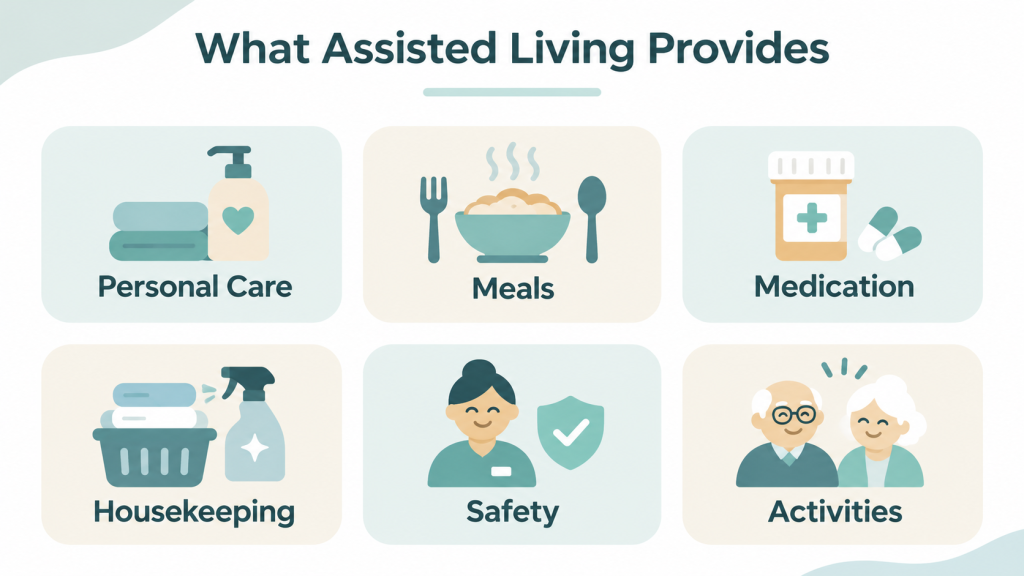
- Help with bathing, dressing, grooming, and safe movement.
- Meals, housekeeping, laundry, and a maintained living space.
- Medication management, including reminders or administration, depending on the provider.
- Staff availability and a plan for emergencies.
- Social activities and companionship without forcing participation.
- A personalized care plan that respects routines and changing needs.
These are common features, not a promise that every assisted living community offers identical services. Confirm the details before choosing a residence.

How Does Assisted Living Help Throughout the Day?
Assisted living is designed to make everyday life more manageable while preserving the choices a resident can still make independently. Support should fit around the person, not require the person to follow a fixed schedule.
Consider someone who can eat independently but needs assistance getting out of bed and dressing. A caregiver may help with a morning transfer, arrange breakfast, and check that prescribed medication is taken correctly. Later, the resident may spend time reading, talking with others, or joining activities that match their interests.
In the evening, staff may help with bathing, preparing for bed, or moving safely around the room. For older adults who have difficulty with mobility, these everyday tasks can become challenging without reliable support.
The National Library of Medicine’s overview of assisted living identifies personal care, meals, medication help, housekeeping, laundry, and transportation among services that residences may offer.
When touring, ask: what does assisted living provide when someone needs bathroom help at 2 a.m.? A clear answer about overnight staffing is more useful than a general promise of 24-hour support.
Practical Tip: Ask how quickly staff can respond to an unscheduled nighttime need, not simply whether someone is on site.
Which Services Are Included, and Which Need Extra Planning?
A good residence should explain what its regular fee covers and when additional assistance may cost more. This matters especially when a parent has diabetes, swallowing difficulties, or a condition that affects mobility.
| Support Area | Common Services | What to Confirm |
|---|---|---|
| Personal care | Bathing, dressing, toileting, and transfers | Frequency of help and overnight coverage |
| Household needs | Meals, cleaning, and laundry | Dietary changes, snacks, and personal laundry |
| Medication | Reminders, storage, or administration | Who handles doses and prescription changes |
| Health needs | Observation and certain nursing services | Which tasks staff can safely and legally perform |
Not every assisted living facility provides the same level of nursing care. Some can accommodate specific medical conditions; others arrange outside health services or recommend a different setting.
Ask for a written explanation of included services and additional fees. Private rooms, shared rooms, recreational programs, and transportation arrangements also vary across living communities. Personal preferences matter alongside safety.
Is an Adult Family Home the Same as an Assisted Living Facility?
No. In Washington, adult family homes and assisted living facilities are separately licensed residential settings, even though both can provide housing and personal support.
The Washington State Department of Social and Health Services describes assisted living facilities as residences generally serving seven or more people. Adult family homes operate in residential houses with smaller groups.
Washington’s long-term care residential options guide explains that both settings may offer meals, supervision, personal assistance, and specialized support.
A nursing home is different again. It is intended for people requiring more extensive nursing and clinical services. Memory care may be offered within different residential settings, but staffing, security, and available services must match the resident’s condition.
In Washington, understanding what does assisted living provide also means checking which type of residence you are considering. A smaller home should not automatically be assumed to offer every medical service, just as a larger community should not be assumed to offer less personal attention.
What Happens When Care Needs Change?
A resident who initially needs medication reminders may eventually require daily assistance with transfers, eating, or managing confusion. A useful care plan explains how changes are noticed, who communicates with the family and health professionals, and when the residence reassesses the resident’s needs.
For example, someone returning from a hospital stay might temporarily need more help standing, walking, and bathing. The family should ask whether staff can provide that support, whether outside nursing is necessary, and whether additional costs apply.
For advanced medical needs, a different level of care may be safest.
Worth Knowing: Having caregivers available around the clock does not necessarily mean a registered nurse is present 24 hours a day.
Cost is another important consideration. Medicare generally does not cover long-term custodial care, including most help with everyday tasks. Washington Medicaid support may be available for eligible residents in participating settings, but eligibility and payment arrangements must be checked separately.
Before signing, place the question “what does assisted living provide?” beside a written list of your loved one’s actual needs. Ask the residence to explain each item, including what happens if those needs increase.
Familiar Routines and Thoughtful Support in Gig Harbor
At Harbor Heritage AFH, we believe that moving into residential care should not mean losing the feeling of home. Our three adult family homes, Peacock Hill House, Rosewood House, and Rosemount House, are located in Gig Harbor, Washington. Owners Jason and Trisha Weron have lived in the area for more than 40 years, and Harbor Heritage has over 10 years of experience caring for seniors.
Our caregivers are available 24 hours a day, helping residents with medication administration, mobility, personal hygiene, feeding, and other daily needs. Our homes also support residents living with conditions such as dementia, Parkinson’s disease, stroke-related challenges, and dysphagia, with services matched to individual needs.
We understand that familiar surroundings and personal routines matter. Residents can bring belongings into a furnished, comfortable home, while families are encouraged to visit frequently. We also welcome conversations about specific medical concerns and support requirements before a family makes a placement decision.
Why Families Consider Harbor Heritage AFH
- More than 10 years in the senior care business.
- Three adult family home locations in Gig Harbor.
- Caregivers available throughout the day and night.
- Support with medication, mobility, feeding, and personal routines.
- Experience with dementia, Alzheimer’s, Parkinson’s, stroke-related conditions, and other senior health challenges.
- Regular staff training, continuing education, and a welcoming approach to family visits.
Explore a Comfortable Care Option in Gig Harbor
If you are exploring senior living for a parent or loved one in Gig Harbor, Pierce County, or nearby Tacoma, we would be glad to discuss your questions and help you understand whether one of our homes is appropriate.
Get in touch with our team to discuss care needs and arrange a visit. We want every family to make a confident, informed decision, even if another setting turns out to be a better fit.
Frequently Asked Questions
Can Someone Bring Their Own Belongings Into an Assisted Living Home?
Yes, many residential settings allow personal belongings. At Harbor Heritage, residents can bring familiar items to make their furnished space feel more like home. Check room arrangements before moving in.
Can Someone Who Uses a Wheelchair Live in Assisted Living?
Often, yes, if the residence can safely meet the person’s mobility and transfer needs. Ask about accessibility, staffing, equipment, and whether the current plan covers the necessary assistance.
Can a Person With Dementia Stay in Assisted Living?
Sometimes, depending on the stage of dementia and the support available. Ask about supervision, wandering risks, behavior changes, and whether specialized memory care is provided.
Do Family Members Help Create the Care Plan?
Families can often contribute useful information about routines, preferences, and medical history, with the resident’s consent or appropriate legal authority. Ask how decisions and changes are communicated.
Does Medicare Pay for Room and Board in Assisted Living?
No, Medicare generally does not pay for assisted living room and board or ongoing custodial care. Families should review private payment options, long-term care insurance, and potential Medicaid eligibility.